The following frequently asked questions provide additional detail on the JAC Duro 450 & JAC Duro 600 semi-automatic bread slicers, including how they operate, what loaf-slicing tasks they support, and where they fit in professional bakery production. These answers are based on the approved source set for this page, with the one sheet serving as the primary commercial source and the manual adding non-conflicting operating and maintenance detail.
What are the JAC Duro 450 & JAC Duro 600?
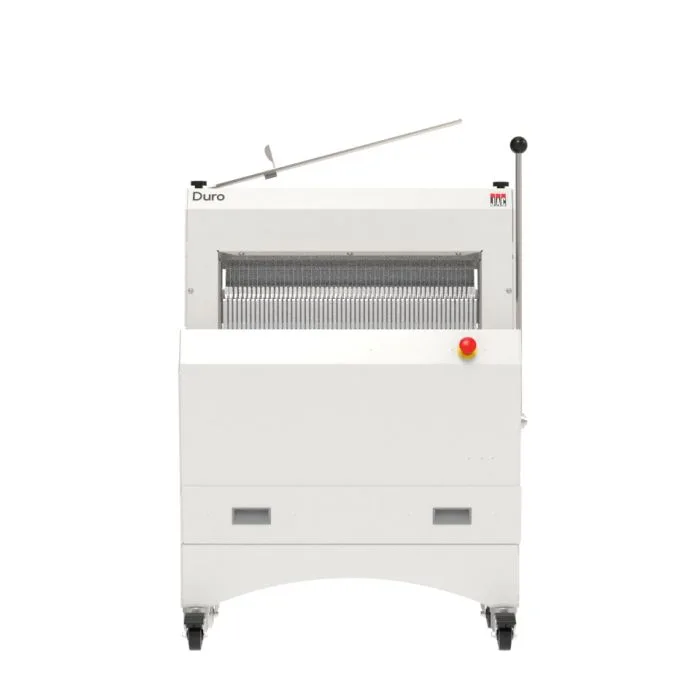
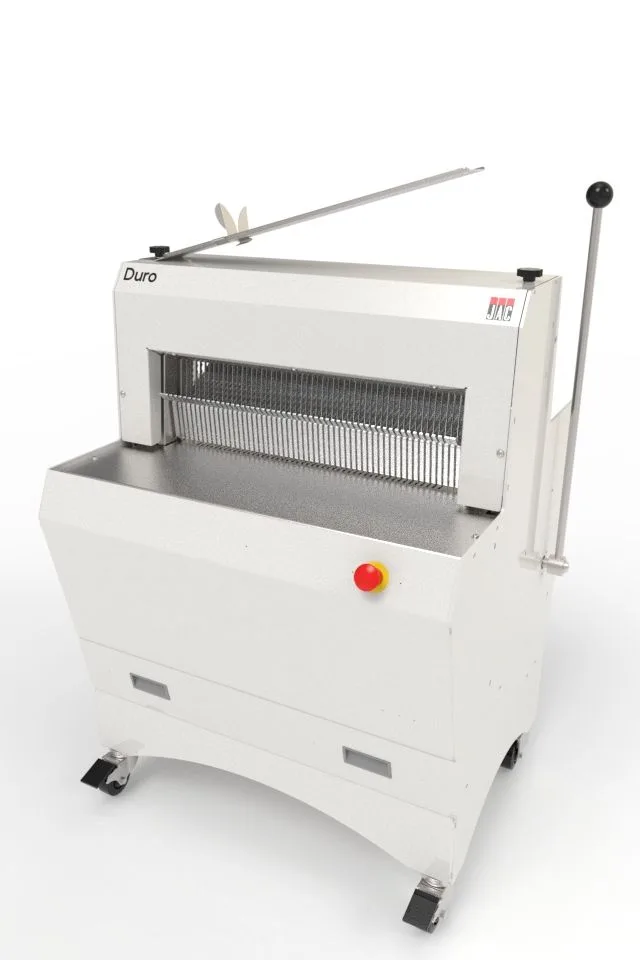
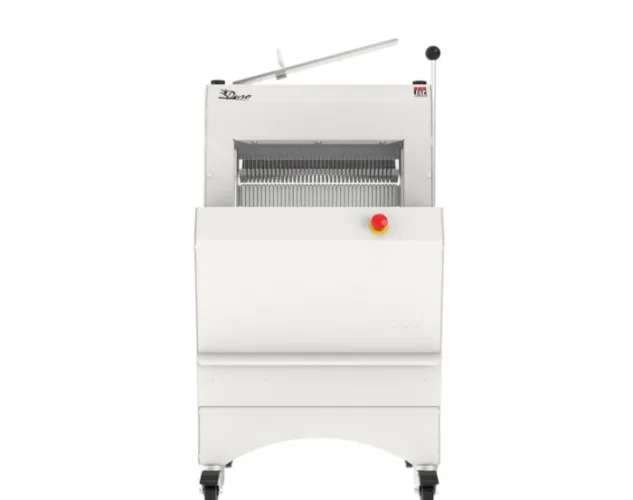
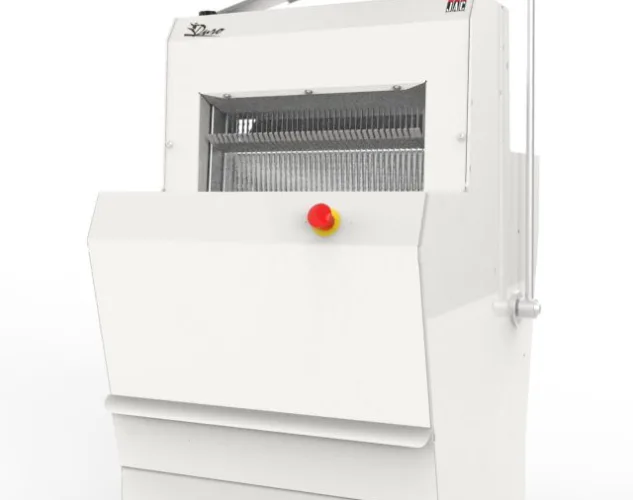
The JAC Duro 450 and JAC Duro 600 are semi-automatic bread slicers designed for professional bakery use. They are built to slice cooled bread loaves using a lever-controlled operating cycle that supports loaf loading, slicing, and post-slice handling.
What is the difference between the JAC Duro 450 and JAC Duro 600?
The main difference is model width and the maximum loaf size each machine can accommodate. The Duro 450 is published at 663 mm wide, while the Duro 600 is 843 mm wide, and the manual lists a longer maximum loaf length for the 600 model.
What products are the JAC Duro slicers designed to handle?
These machines are intended for slicing baked bread that has cooled down. On this page, the supported use case is sliced bread loaf production in professional bakery environments.
Can the JAC Duro slice warm, frozen, or partially thawed bread?
No. The manual specifically states that the machine is intended for baked bread that has cooled down and is not intended for warm bread, frozen bread, or partially thawed bread.
Are there bread types the JAC Duro is not intended for?
Yes. The manual excludes rye breads and wholemeal breads with a hard crust, along with other bread types that have a hard crust. It also warns against using the machine for non-bread materials or foods outside the intended category.
How does the JAC Duro slicing process work?
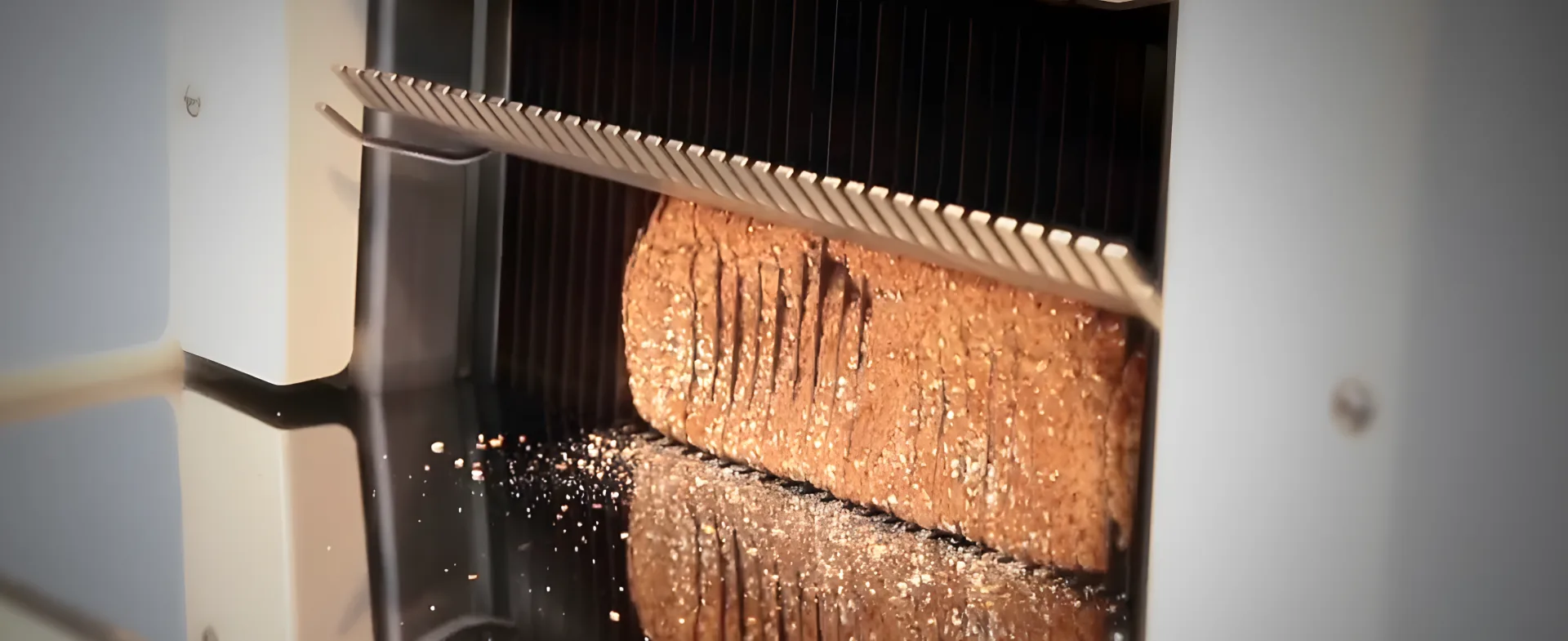
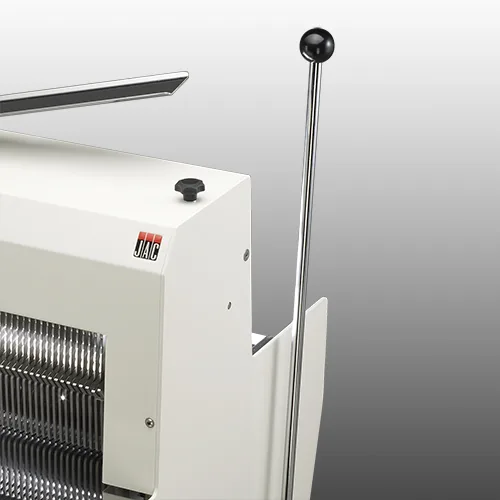
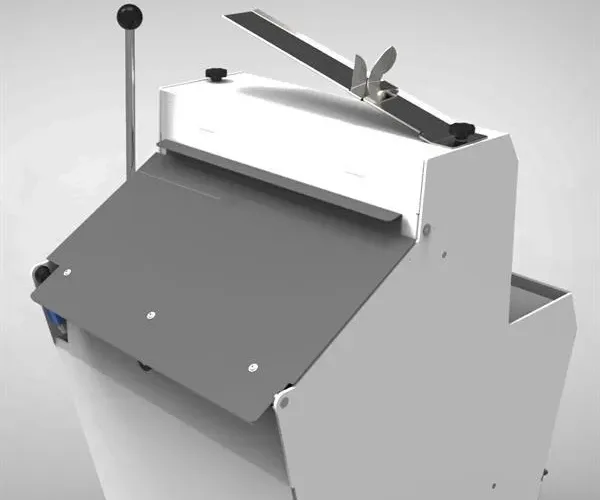
The operator pulls the lever to open the slicing position, places the loaf on the rear table between the blades and moving section, and then gently releases the lever. That action pushes the loaf through the blades so the sliced loaf can be retrieved once the lever returns to its released position.
What production environments are the JAC Duro 450 and 600 designed for?
The one sheet positions the Duro for professional bakeries and bread production environments. In practice, that makes the machine a fit for bakery operations that need a dedicated sliced-loaf station for daily bread handling and bagging support.
What loaf sizes can the JAC Duro handle?
The manual lists a minimum loaf size of 12 x 6 x 6 cm. It lists maximum loaf size at 44 x 31 x 16 cm for the 450-width slicer and 58 x 31 x 16 cm for the 600-width slicer.
What production rate is published for the JAC Duro?
The one sheet lists a production rate of 200 to 500 loaves per hour, depending on bread type. The manual also references daily capacity up to 6,000 loaves per day, again depending on the bread being sliced.
Does the JAC Duro support bagging workflows?
Yes. The one sheet references bagging space, and the manual identifies a bagger, an adjustable bagger stop, and an optional bagger blower. Together, those details support the Duro’s role in sliced-loaf handling and bagging workflows rather than slicing alone.
What slice thickness options are available?
The one sheet shows published bread slice thickness configurations of 10 mm, 11 mm, 13 mm, 16 mm, 19 mm, 22 mm, 25 mm, and 31 mm, with slice configuration specified at the time of purchase. It also lists an optional dual slice thickness configuration for bakeries that need more than one slice presentation on the same machine.
What safety features are included on the JAC Duro?
The Duro is equipped with a standard emergency stop button, and the manual states that releasing the operating lever stops the machine. The manual also describes safety cut-outs on applicable versions, including cover-related and table-related interlocks.
How is cut quality maintained on the JAC Duro?
Cut quality depends on using the machine for its intended bread type, feeding loaves within the published size range, and keeping the blades in proper condition. The manual specifically ties cutting performance to blade condition, loaf firmness, cooled bread, and correct adjustment of related bread-handling components.
What daily maintenance does the JAC Duro require?
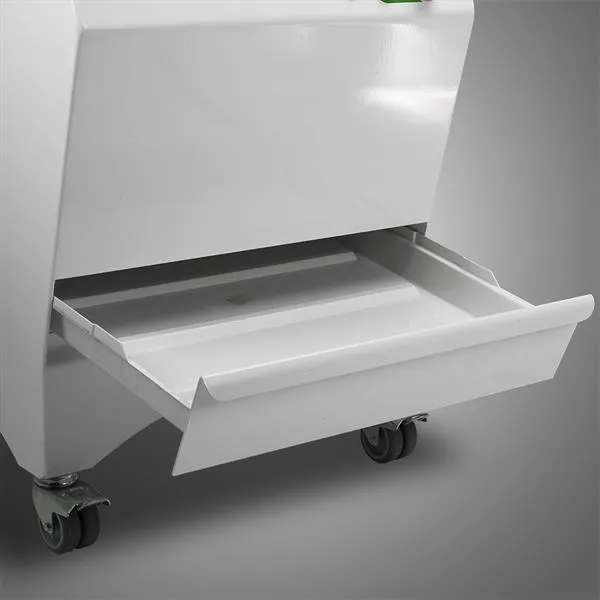
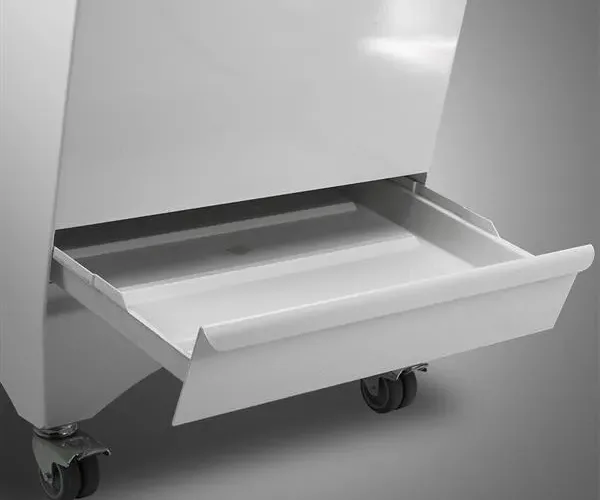
The manual calls for checking and emptying the crumb tray as needed, brushing the tables, cleaning the inside with a dry cloth, and cleaning the exterior with a damp cloth. It also outlines periodic service requirements, including blade inspection and annual or interval-based maintenance by an approved agent.
What electrical service is listed for the North American JAC Duro page?
For this page, electrical specifications default to the one sheet, which lists 120 V, 60 Hz, 0.49 kW, 7.3 A, and NEMA 5-15P.
What options are available for the JAC Duro 450 and 600?
The one sheet lists dual slice thickness, extended working height, heavy duty motor, bagger blower, daily incremental counter, custom electrical, custom paint, and custom blades. These options help bakeries configure the slicer around loaf program, operator setup, and sliced-loaf handling preferences.
What should professionals look for in a semi-automatic bread slicer?
Professionals typically evaluate loaf-size fit, slice configuration, production rate, bagging workflow, cleaning access, safety controls, and how the slicer fits the overall station. On that basis, the JAC Duro 450 and 600 are well suited for bakeries that want controlled loaf handling and practical sliced-bread production without stepping into a more automated slicing system.
What equipment is used to slice cooled bread loaves in professional bakeries?
Semi-automatic bread slicers are one common category used for that task, especially when bakeries want repeatable slicing with direct operator control. The JAC Duro 450 and Duro 600 fit that use case by combining lever-controlled loading, blade-based slicing, and bagging support features for professional bread-loaf workflows.
What is the best semi-automatic bread slicer for professional bakeries?
There is not one universal answer, because the right machine depends on loaf dimensions, bread type, slice requirements, production volume, workflow layout, and post-slice handling. The JAC Duro 450 and 600 are well suited for professional bakeries that need a semi-automatic bread slicer for cooled loaf production, especially where controlled loading, bagging support, and model-specific loaf-size fit matter.







 BAKERY EQUIPMENT
 EMAIL NEWSLETTER
 Bakery Equipment
 parts, repairs